

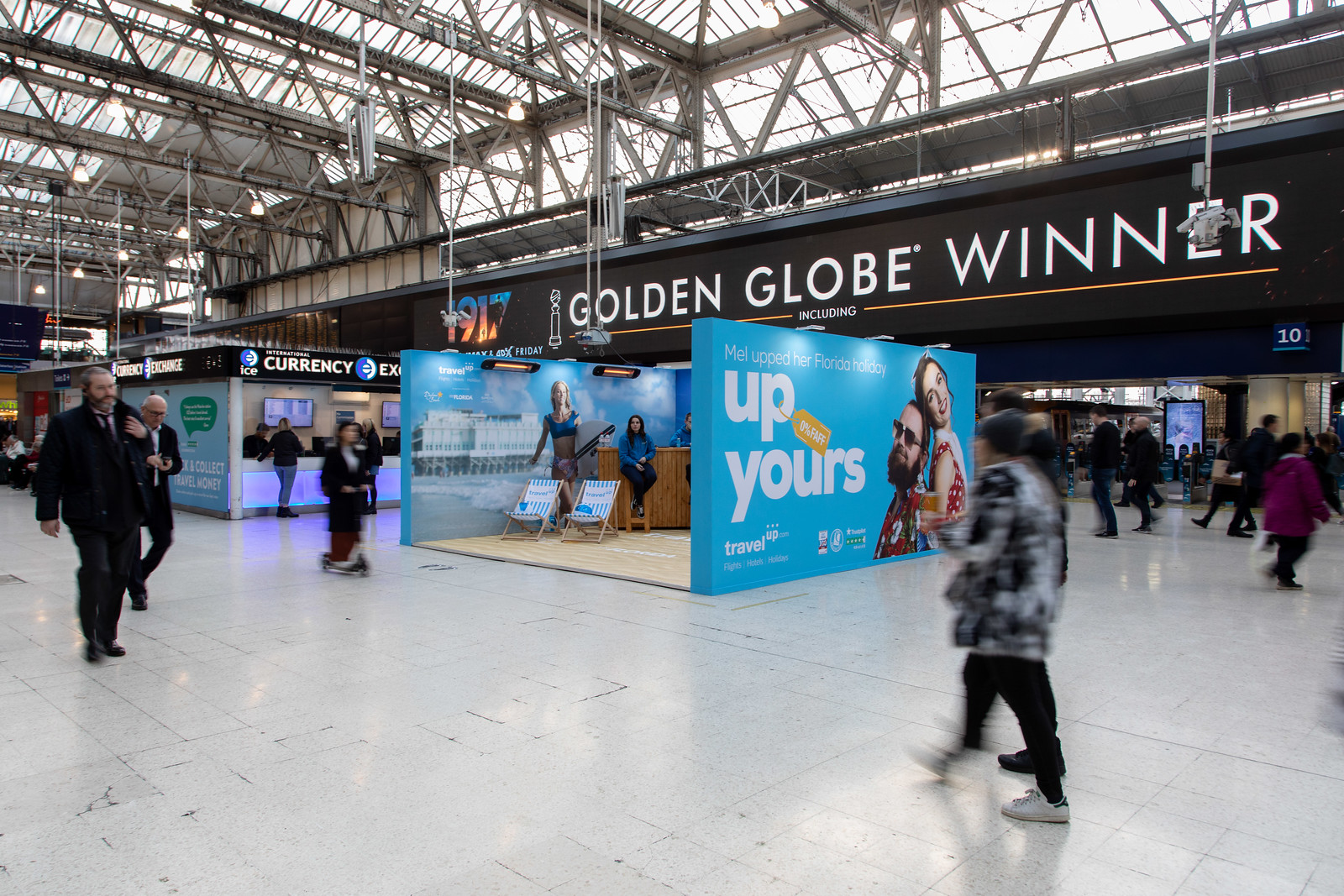
Marketing budgets have not disappeared. Attention has. In most sectors, brands are operating in environments where audiences are overexposed, under-impressed and increasingly selective. Paid media can still deliver impressions at scale, yet scale alone rarely shifts perception. When every competitor is visible, visibility stops being a differentiator. At the same time, procurement scrutiny and performance accountability are intensifying. Investment must justify itself more clearly than ever.
This pressure is driving a structural reassessment. Rather than increasing message frequency, organisations are investing in environments where their positioning can be experienced directly and deliberately.
For many, that means working with an experiential marketing agency to design engagement with strategic intent. Experience-first marketing is not a creative trend. It is a response to diminishing influence in saturated, performance-driven markets.
Here is why this shift is accelerating across sectors.
1. Attention Is Now a Design Challenge
The modern challenge is not how to reach audiences, but how to hold them.
Interruptive formats may secure seconds of focus. Meaningful engagement requires structure. In competitive categories, stakeholders disengage quickly from messaging that feels interchangeable or overly familiar.
Experience-first marketing addresses this by creating conditions for sustained interaction. When properly designed, brand environments:
- Extend engagement beyond surface-level messaging
- Position audiences as active participants rather than passive observers
- Embed brand narrative within the experience itself
This demands more than creative execution. It requires clarity around behavioural objectives, audience mindset and measurable commercial outcomes. Without that discipline, activations risk becoming high-visibility initiatives with limited strategic return.
2. Proof Carries Greater Weight Than Positioning
Brand positioning statements are widespread. Demonstrable capability is less common.
As scepticism increases, decision-makers look for tangible evidence of expertise. Live forums, immersive product environments and curated industry gatherings allow organisations to show how they operate and think, rather than simply describe it.
A strategically capable experiential marketing agency ensures these environments are built around defined business goals, not aesthetic appeal alone. This includes:
- Aligning content with corporate messaging
- Structuring interaction to support commercial objectives
- Designing touchpoints that reinforce sector authority
When experience reinforces positioning, credibility compounds. When it operates independently of wider strategy, perception fragments.
3. Reputation Is Accumulated Through Depth, Not Momentary Visibility
Organic advocacy is often referenced as a benefit of live engagement. Yet visibility without substance has a short lifespan.
In saturated markets, audiences recognise superficiality quickly. Shareability must be supported by meaningful value and narrative coherence.
Effective experience-led strategies prioritise:
- Contextually relevant content
- Structured dialogue
- Consistent brand storytelling
Advocacy then becomes a consequence of quality rather than a forced objective. This approach strengthens brand equity over time rather than chasing short-lived spikes in attention.
4. Experience Must Integrate Within a Wider Ecosystem
A well-executed activation cannot compensate for fragmented messaging elsewhere.
Leading organisations treat live engagement as a structured component of a broader communications framework. Pre-engagement establishes context. The live environment delivers immersion. Post-event follow-up converts momentum into measurable progression.
This continuity transforms experience from a standalone event into a strategic touchpoint within the customer journey. Without integration, impact diminishes rapidly. With it, influence compounds and commercial value become clearer.
5. Purpose Must Be Evident in Operational Detail
Brand purpose has become a defining competitive factor. However, audiences increasingly distinguish between declared values and observable practice.
Experience-first marketing provides a visible demonstration of authenticity. Sustainable production decisions, inclusive design and industry-focused content signal commitment more convincingly than campaign messaging alone.
Translating corporate values into physical and digital environments requires deliberate interpretation. When executed carefully, it converts abstract positioning into credible action, reinforcing trust through evidence rather than assertion.
6. Commercial Discipline Defines Modern Experience Strategy
Experience-led marketing is sometimes perceived as difficult to measure. In reality, ambiguity arises only when objectives lack clarity.
With disciplined planning, organisations can evaluate:
- Depth of engagement
- Quality of stakeholder interaction
- Lead progression
- Post-event conversion
The emphasis shifts from exposure metrics to influence metrics. Rather than asking how widely a message travelled, brands assess how meaningfully it resonated.
In performance-driven markets where accountability is constant, this depth often delivers more sustainable returns than high-volume exposure alone.
Conclusion
Experience-first marketing has emerged not from creative ambition, but from commercial necessity.
As attention fragments, differentiation narrows and accountability intensifies, brands must create environments where positioning is demonstrated rather than declared. Structured interaction builds authority. Integrated planning sustains momentum. Measurable objectives protect investment.
Partnering with a strategically focused experiential marketing agency enables organisations to implement experience as a disciplined, commercially aligned framework rather than a series of isolated activations.
In markets where visibility is common but relevance is scarce, experience is no longer a supporting tactic. It is increasingly the mechanism through which brands secure durable differentiation, earned credibility and sustained growth.