

Race preparation involves weeks or months of structured training. A preventable skin problem should not undermine that work. Nipple chafing can appear during a race when sweat, rain and continuous shirt movement irritate the chest over many kilometres.
The right time to solve the issue is during the training block, not in the starting area. A complete race-day protection plan should be tested as carefully as shoes, pacing and nutrition.
Four Weeks Before the Race
Review previous long runs. Identify any redness, tenderness or bleeding around the nipple area.
Write down:
-
Which top was worn
-
Distance completed
-
Weather conditions
-
Protection used
-
Vest or belt setup
-
When irritation began
-
How long recovery took
Choose the most comfortable clothing combination and stop experimenting with unnecessary new items.
Three Weeks Before the Race
Complete a long run in the intended race top. Wear the same sports bra, base layer, hydration system and chest-mounted equipment planned for race day.
Apply the chosen anti-chafe protection using the intended quantity. Afterwards, inspect the full contact area, even if no pain occurred.
Minor redness is useful information. It suggests the routine needs adjustment before the event.
Two Weeks Before the Race
Test the system in different conditions where possible. Weather cannot be controlled, but runners can learn how the clothing responds to moisture.
A wet-weather test may involve running safely in rain. A warm-weather test can reveal whether heavy perspiration changes the garment’s fit.
Do not deliberately expose yourself to unsafe temperatures merely to test clothing. Use normal training opportunities and make reasonable observations.
One Week Before the Race
Wash and prepare the final race kit. Check for changes in fabric texture, damaged seams or peeling printed graphics.
Pack anti-chafe protection in the race bag and add a compact option to the kit carried during the event.
Do not rely on the race expo to supply a familiar product. New formulations or adhesives should not be introduced immediately before the start.
Race-Morning Application
Nipple chafing while running is easier to prevent when protection is applied before the athlete enters a crowded start area.
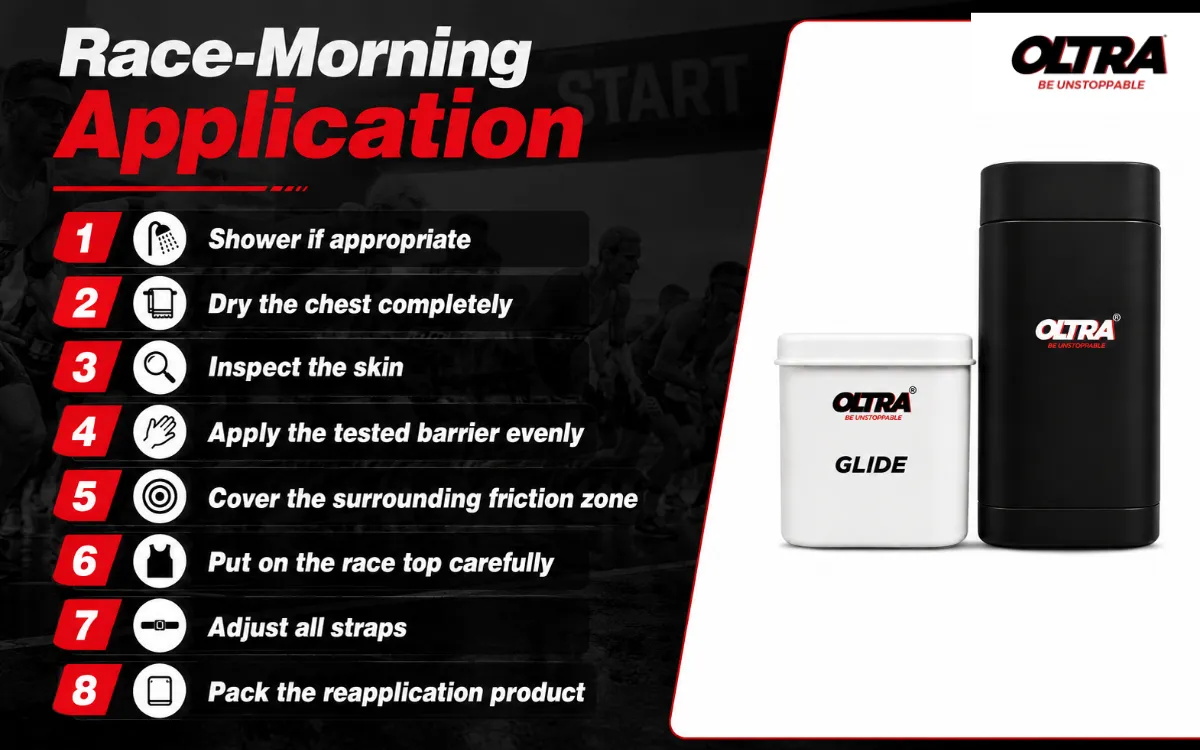
Use this sequence:
-
Shower if appropriate.
-
Dry the chest completely.
-
Inspect the skin.
-
Apply the tested barrier evenly.
-
Cover the surrounding friction zone.
-
Put on the race top carefully.
-
Adjust all straps.
-
Pack the reapplication product.
Allow enough time to complete the routine without rushing.
Consider the Start-Line Wait
Large races can involve a long delay between leaving accommodation and crossing the start line. Heat, warm-up activity or waterproof throwaway layers may cause sweating before the race begins.
When the start delay is substantial, carry protection and check whether reapplication is needed shortly before entering the final pen.
Keep the chest covered in cold conditions, but ensure the temporary layer does not have a rough inner surface.
Adjust for the Forecast
Hot race
Expect heavy sweat and consider earlier reapplication.
Wet race
Use a kit tested when saturated. Pack protection in a waterproof pocket.
Cold race
Wear smooth layers and avoid thick chest seams.
Windy race
Make sure the top does not flap repeatedly against the body.
A forecast should guide preparation without causing last-minute changes to completely untested kit.
During the Race
Pay attention to the first signs of rubbing. A mild sting at kilometre 10 can become severe by kilometre 30.
At an aid station or private location:
-
Smooth the garment.
-
Adjust chest straps.
-
Reapply the tested balm.
-
Add a suitable cover.
-
Change a wet top if the race setup allows.
-
Ask medical staff for help when the skin is damaged.
Do not use random household tape offered by another participant. Adhesive should be intended for skin.
Finish-Line Care
Remove wet clothing as soon as practical. Sweat and salt should not remain pressed against irritated tissue.
Clean the area gently and pat it dry. Wear a soft recovery top that does not rub.
If bleeding has occurred, protect the area with an appropriate clean dressing. Seek medical attention for severe skin damage, signs of infection or symptoms that worsen after the event.
Learn from the Race
Record what worked while the experience is fresh. Note whether protection lasted, when reapplication occurred and how the skin looked afterwards.
This information improves preparation for the next event. Even a successful race can reveal small changes that would make future running more comfortable.
Why Choose Oltra for Race Preparation?
Oltra is a British wellness brand creating natural products for people who want to move comfortably. Oltra Glide’s starter pack includes a reusable applicator and one replaceable 40g refill. Its direct application format can be used on the chest, thighs, underarms, feet and other friction hotspots. The plant-based-certified formula is vegan, cruelty-free, petroleum-free, paraben-free and aluminium-free.
Runners concerned about chafing on nipples can test Oltra Glide throughout their training block and carry it for reapplication during longer events. The unscented Core option can suit athletes who prefer no added scent around the chest.
Protect the Training You Have Completed
A successful race depends on many factors, but preventable rubbing should not be allowed to dominate the day.
Test the complete kit, apply protection before the start and respond to early warning signs. Better preparation allows the runner to focus on effort, atmosphere and reaching the finish line.