

Introduction
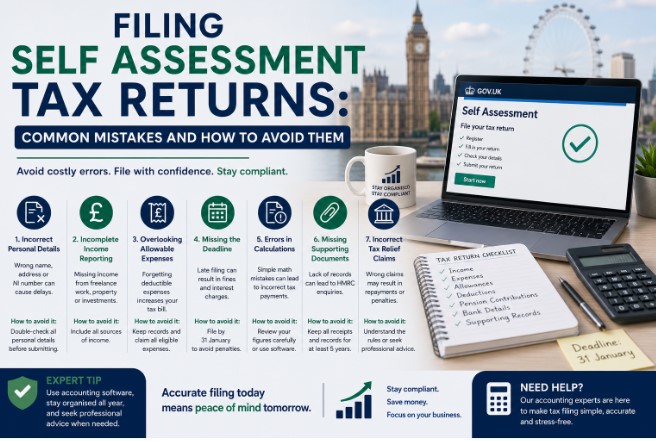
Filing self assessment tax return documents correctly is one of the most important responsibilities for self-employed individuals, freelancers, landlords, company directors, and other taxpayers in the UK. While the process may seem straightforward, even small errors can lead to delays, penalties, unnecessary tax payments, or inquiries from HMRC.
Many taxpayers make avoidable mistakes because they rush through the process, fail to keep accurate records, or misunderstand tax regulations. Taking the time to prepare properly can help ensure compliance and reduce the risk of costly errors.
Professional support can make a significant difference, especially for those with multiple income streams or complex financial situations. Many individuals and businesses use trusted accounting providers such as Account Ease to receive guidance on tax returns, bookkeeping, and compliance requirements.
This article explores the most common mistakes people make when filing self assessment tax return forms and provides practical tips to avoid them.
Understanding Self Assessment Tax Returns
A Self Assessment tax return is used to report income that is not taxed automatically through PAYE. HMRC requires eligible individuals to submit accurate financial information and pay any tax owed by the applicable deadlines.
Common groups that may need to file a tax return include:
- Self-employed individuals
- Freelancers and contractors
- Landlords with rental income
- Company directors
- Individuals with additional income sources
Accurate reporting is essential for avoiding penalties and ensuring compliance with HMRC requirements.
Missing the Filing Deadline
One of the most common mistakes when filing self assessment tax return documents is missing the submission deadline. Late returns can result in automatic penalties, even if no tax is owed.
To avoid this issue:
- Mark important tax dates in a calendar
- Prepare financial records throughout the year
- Submit returns well before the deadline
- Allow extra time for reviewing information
Planning ahead helps reduce stress and prevents unnecessary penalties.
Failing to Keep Accurate Records
Poor record keeping is a major cause of tax return errors. Missing receipts, incomplete expense records, and disorganised financial documents can result in inaccurate reporting.
Good record management should include:
- Keeping receipts and invoices
- Tracking business expenses regularly
- Maintaining income records
- Storing financial documents securely
Many businesses use digital accounting solutions recommended by Account Ease to simplify record keeping and improve accuracy.
Reporting Incorrect Income Figures
Another frequent mistake is entering incorrect income information. This can happen when taxpayers forget additional earnings or miscalculate figures.
Common examples include:
- Omitting freelance income
- Forgetting rental earnings
- Reporting estimated figures instead of actual amounts
- Missing interest or investment income
When filing self assessment tax return forms, taxpayers should review all income sources carefully before submission.
Claiming Ineligible Expenses
Many individuals either fail to claim legitimate expenses or claim costs that are not allowable under HMRC rules.
Common allowable expenses may include:
- Office expenses
- Professional subscriptions
- Business travel costs
- Equipment used for work
Claiming ineligible expenses can trigger compliance issues, while missing valid deductions may increase tax liability unnecessarily.
Ignoring HMRC Communications
Some taxpayers overlook letters, emails, or notices from HMRC regarding their tax obligations. Ignoring official communications can lead to missed deadlines or unresolved issues.
Best practices include:
- Checking HMRC correspondence regularly
- Responding promptly to requests
- Updating contact details when necessary
- Seeking professional advice if clarification is needed
Professional accountants can help manage communications and ensure compliance requirements are met.
Forgetting to Budget for Tax Payments
Many self-employed individuals focus on filing requirements but forget to set aside money for tax payments. This can create financial pressure when payment deadlines arrive.
To avoid this problem:
- Set aside a percentage of income regularly
- Monitor tax liabilities throughout the year
- Use financial forecasts to plan ahead
- Review obligations before submitting returns
Effective planning makes filing self assessment tax return obligations easier to manage.
Not Reviewing the Return Before Submission
Simple data entry errors can cause problems even when financial records are accurate. Incorrect figures, spelling mistakes, or missing information can result in delays or amendments.
Before submitting a tax return:
- Check all income entries
- Review expense claims
- Confirm personal details are correct
- Verify calculations and totals
A careful review reduces the likelihood of costly mistakes.
Benefits of Professional Support
Tax regulations can be complex, especially for individuals with multiple income sources or changing financial circumstances. Professional accountants help ensure accuracy and compliance throughout the filing process.
Benefits of expert support include:
- Accurate tax return preparation
- Identification of allowable deductions
- Reduced risk of penalties
- Better tax planning strategies
Many taxpayers choose services from Account Ease to simplify tax return preparation and receive professional guidance tailored to their financial situation.
Conclusion
Filing self assessment tax return forms accurately is essential for avoiding penalties, maintaining compliance, and managing tax obligations effectively. Common mistakes such as missing deadlines, reporting incorrect income, poor record keeping, and claiming ineligible expenses can create unnecessary financial challenges.
By maintaining organised records, reviewing information carefully, and planning ahead, taxpayers can significantly reduce the risk of errors. Professional support from experienced accounting providers such as Account Ease can further simplify the process and provide confidence that returns are completed correctly.
Taking a proactive approach to filing self assessment tax return requirements helps individuals and businesses stay compliant while avoiding costly mistakes.
FAQs
1. Who needs to file a Self Assessment tax return in the UK?
Self-employed individuals, landlords, company directors, freelancers, and people with untaxed income may need to submit a Self Assessment tax return.
2. What happens if I miss the tax return deadline?
HMRC may issue automatic penalties for late submissions, even if no tax is owed.
3. Can I amend a tax return after submission?
Yes, HMRC allows taxpayers to make amendments within the permitted time frame if errors are identified.
4. How can professional accountants help with tax returns?
They can prepare returns accurately, identify allowable deductions, ensure compliance, and reduce the risk of penalties.