

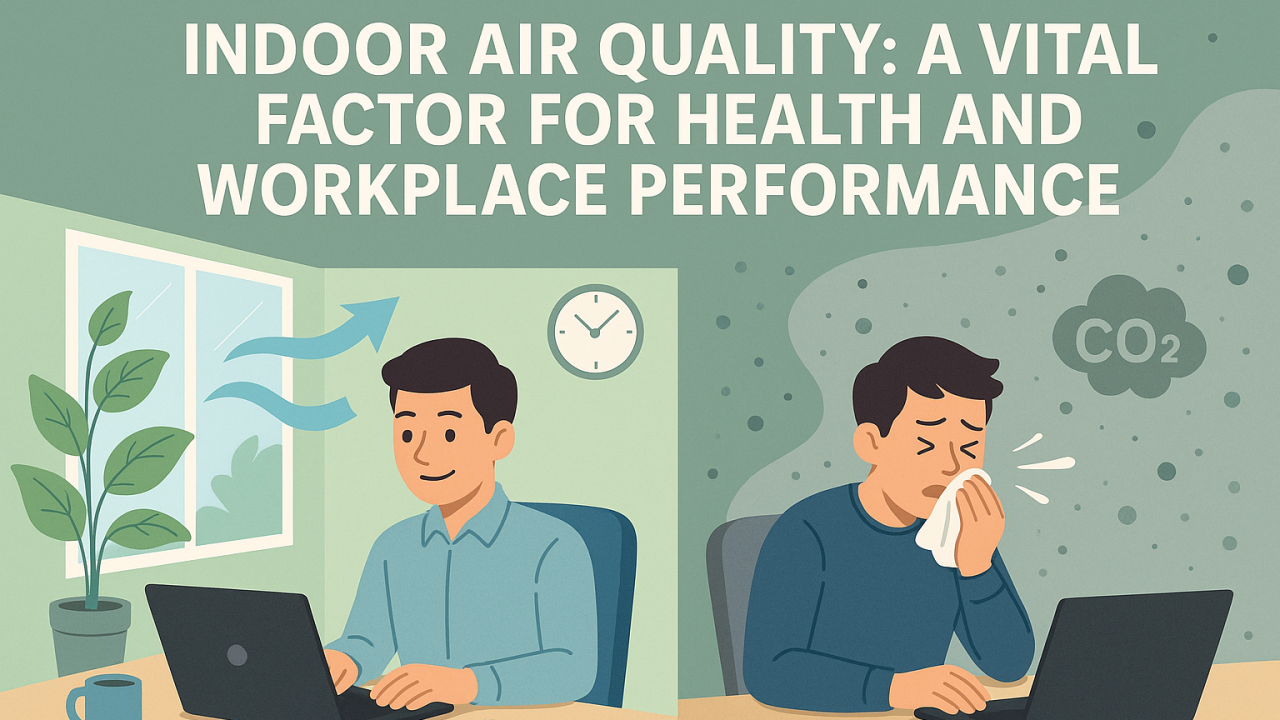
When businesses invest in employee wellbeing, they tend to focus on the visible: ergonomic chairs, good lighting, wellness perks. But one of the most powerful factors is completely invisible — the quality of the air people breathe for eight hours a day. Dust, fine particles and poor ventilation quietly affect health, comfort and performance, and the smartest employers are starting to pay attention.
The Hidden Impact of Indoor Air
Poor air quality doesn’t announce itself, but its effects show up across the workforce.
● More headaches, fatigue and sick days
● Aggravated allergies and respiratory issues
● Reduced concentration and slower thinking
● Lower overall comfort and morale
Why It’s a Business Issue
Air quality isn’t only a health matter — it’s a performance one. The European Environment Agency links particulate exposure to a wide range of health effects, and even moderate indoor dust can dent focus and wellbeing. For employers, cleaner air means healthier, more productive teams and fewer lost days. Companies like Saksham Scientific help organisations measure indoor air so they can act on it.
Knowing Your Workplace Limits
Workplaces are also subject to exposure limits for airborne particles, which makes measurement important. Measuring against these turns a vague concern into a clear, manageable target — and shows employees their health is taken seriously.
Measuring and Improving Air Quality
The practical first step is to measure. An air quality monitor reveals particle levels in real time, so businesses can improve ventilation, adjust cleaning routines and verify the results. You can find suitable monitoring equipment at https://sakshamscientific.in/dust-monitoring-kit/, ready to give your workplace a clear picture of the air your team breathes.
Frequently Asked Questions
How does air quality affect employees?
Poor indoor air is linked to headaches, fatigue, allergies and reduced concentration, which means more sick days and lower productivity across a workforce.
Is workplace air quality a legal concern?
It can be. Workplaces are subject to exposure limits for airborne dust and particles, so monitoring helps demonstrate a safe environment and meet obligations.
How can a business improve indoor air quality?
Start by measuring with an air quality monitor, then improve ventilation and cleaning routines and verify the impact with continuous monitoring data.